
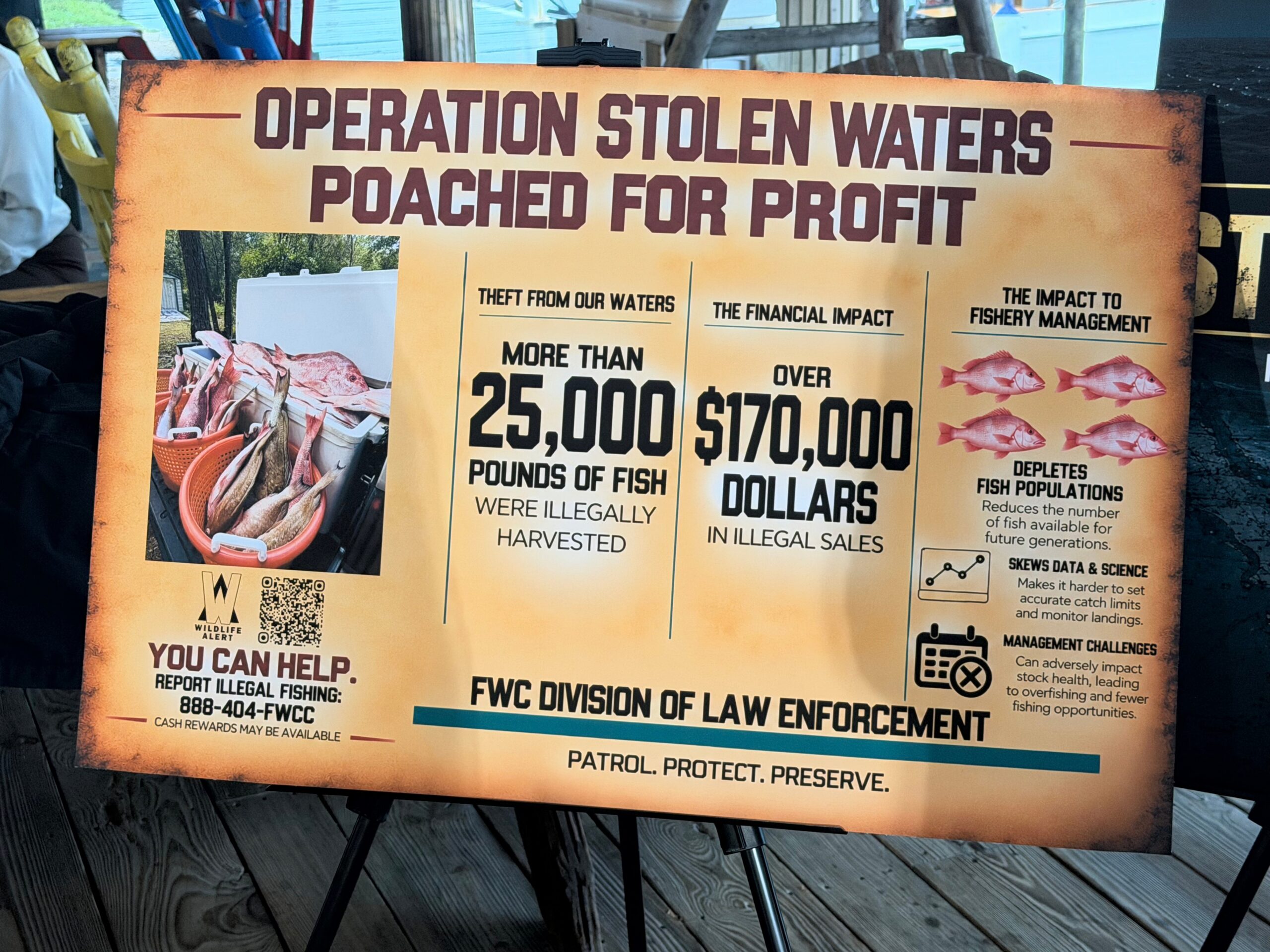
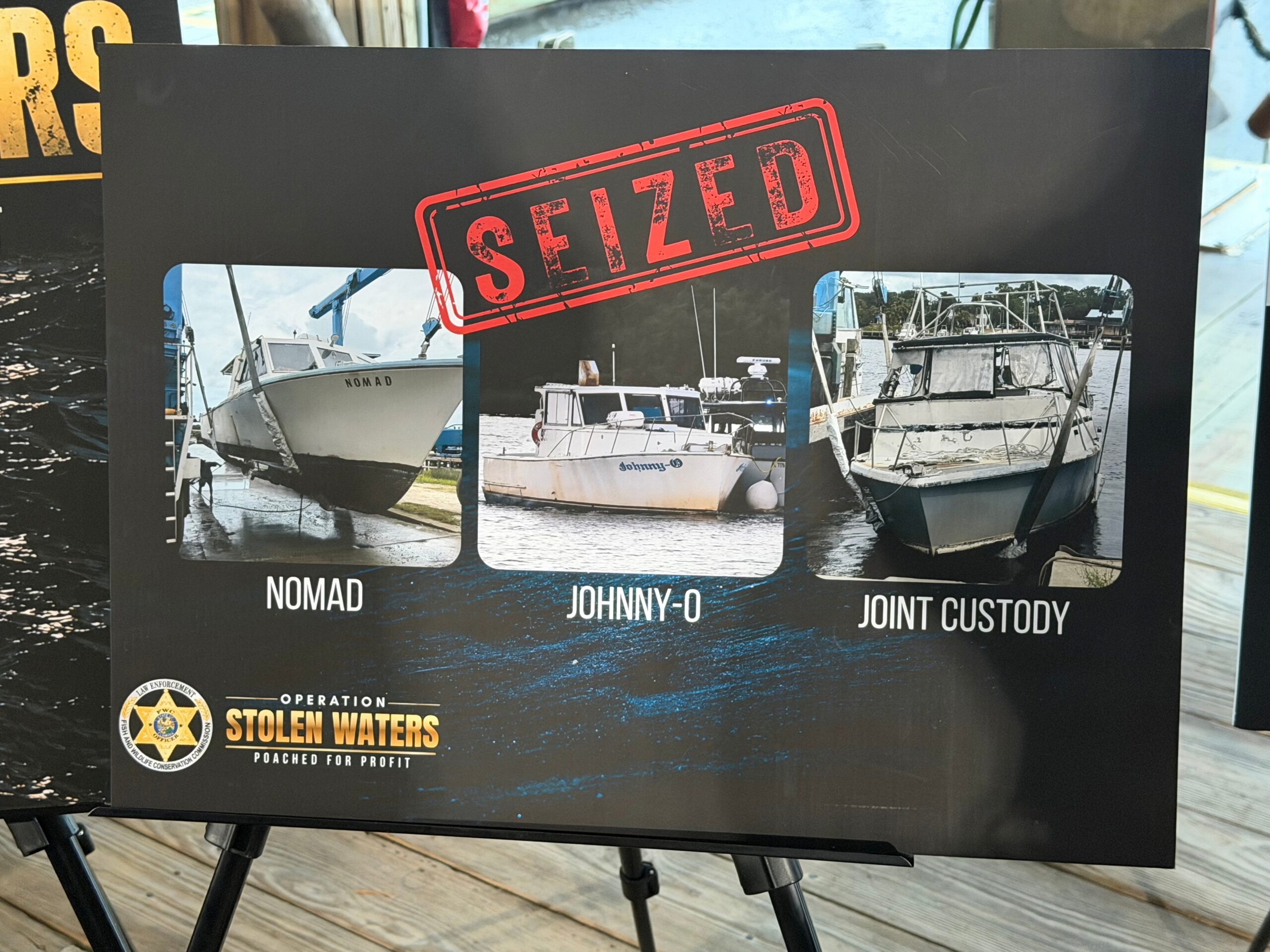
Photos courtesy of the Florida Fish and Wildlife Conservation Commission (FWC)
In 2007, the Gulf Fishery Management Council gave more than half of all the red snapper harvested in the Gulf to about 1,200 commercial harvesters based solely on their past catch history, completely free of charge. The industry immediately began consolidating, as larger share owners bought out smaller ones. The industry is down to a few hundred shareholders remaining today, with a few dozen of those emerging as major shareholders owning about half of all the red snapper caught commercially in the Gulf.
Since then, the commercial sector – and NOAA Fisheries – has trumpeted the accountability of the system. It has been presented as airtight, with harvesters hailing in and out, processing their catch through seafood dealers, and tracking every fish, they say. “Accountability” became the buzz word of fisheries management, and having christened themselves as fully accountable, the commercial sector was more than happy to bludgeon the recreational sector, which has struggled for decades under a federal data system that has repeatedly failed them, as “unaccountable.”
No system is perfect, though, and through the years cracks have emerged in the commercial catch share system. The ‘haves’ wielded enormous power over the ‘have nots,’ and a leasing system developed that created a class of sharecropper fishermen who fish making pennies while Snapper Lords sit on the beach making bank. Rumors began to circulate of disruptive commercial fishermen being blackballed by the Snapper Lords and shut out of the fishery. Grouper fishermen complained that they couldn’t get leased snapper to cover their bycatch, which was a key selling point of the entire catch share program in the first place. One grouper fisherman testified to throwing back 17,000 pounds of dead red snapper on a single trip. Young fishermen complained that they couldn’t break into the fishery, as shares were tightly held and lease prices were high. Stakeholders noted that although the program had created millionaires, the program’s administrative fees didn’t cover the cost of running the program. And although never intended as a property right, the shares are treated as such in every respect, even being lost in divorces and passed down as an inheritance. Somewhere in the process, the shares of a public resource morphed into private property.
And cracks emerged in the veneer of “accountability” as well. In 2018, state enforcement officers began testifying at the Gulf Council that they were seeing a pattern of commercial harvesters hailing in with the exact same weight of red snapper trip after trip, but whenever they were checked at the dock by law enforcement – which was rare – the actual weights were two or three times greater or more.
One state enforcement officer stated at a Council meeting in 2019, “The guy was saying he was going to land 500 pounds and when we show up, he lands 1,500…unless we show up, that 1,000 pounds never goes into the quota. It’s never documented. It’s all black market sales, and it never goes on any sort of reporting document, and it doesn’t go on trip tickets, and so it’s taking fish right out of the stock that are never accounted for.”
The officer was there to encourage implementation of an enforceable accuracy estimate in landings to discourage the practice of “people loading the fish up and selling them through the back doors of restaurants.”
NOAA officials and commercial Council representatives – who had proudly said for years that professional fishermen could keep track of their catches with digital accuracy – were quick to dismiss the claims, suddenly preaching that it is really hard for anyone to estimate the weight of a catch at sea and blaming the practice – if it was intentional – on “a few bad apples.”
NOAA’s Office of Law Enforcement may have been willing to believe the “few bad apples” theory, but the officers on the ground actually doing the enforcement work in the states were not. Last week, Florida Attorney General James Uthmeier joined the Fish and Wildlife Conservation Commission (FWC) and local law enforcement to announce charges against 10 people accused of doing exactly what had been presented to the Gulf Council years before. Investigators say the group routinely caught far more red snapper and gag grouper than allowed, then dodged reporting requirements by selling fish dockside at night, out of their homes, or through on-the-water handoffs. Three of them were even catching and selling sea turtles, which are a protected species. An FWC enforcement official confirmed that the arrested fishermen and seized vessels were participants in the catch share program.
It doesn’t take much imagination to dream up ways to skirt the supposedly airtight reporting requirements of the commercial catch share program, particularly if the people charged with administering it are content to turn a blind eye. Despite federal officials being told exactly how it was being done in 2018, it took state enforcement effort to bring it unequivocally to light. Given the size of the coastlines of Texas, Florida and Louisiana and the limitations on enforcement manpower and resources, it is easy to believe the state officer who said in 2018 that the extent of the problem could be exponentially higher than estimated.
Florida should be commended for investing the time and resources to shine a light on an illegal practice and putting out a warning to any others who might be engaged in the same activity. Accountability is a worthy goal, but just saying a sector is accountable doesn’t make it so.