
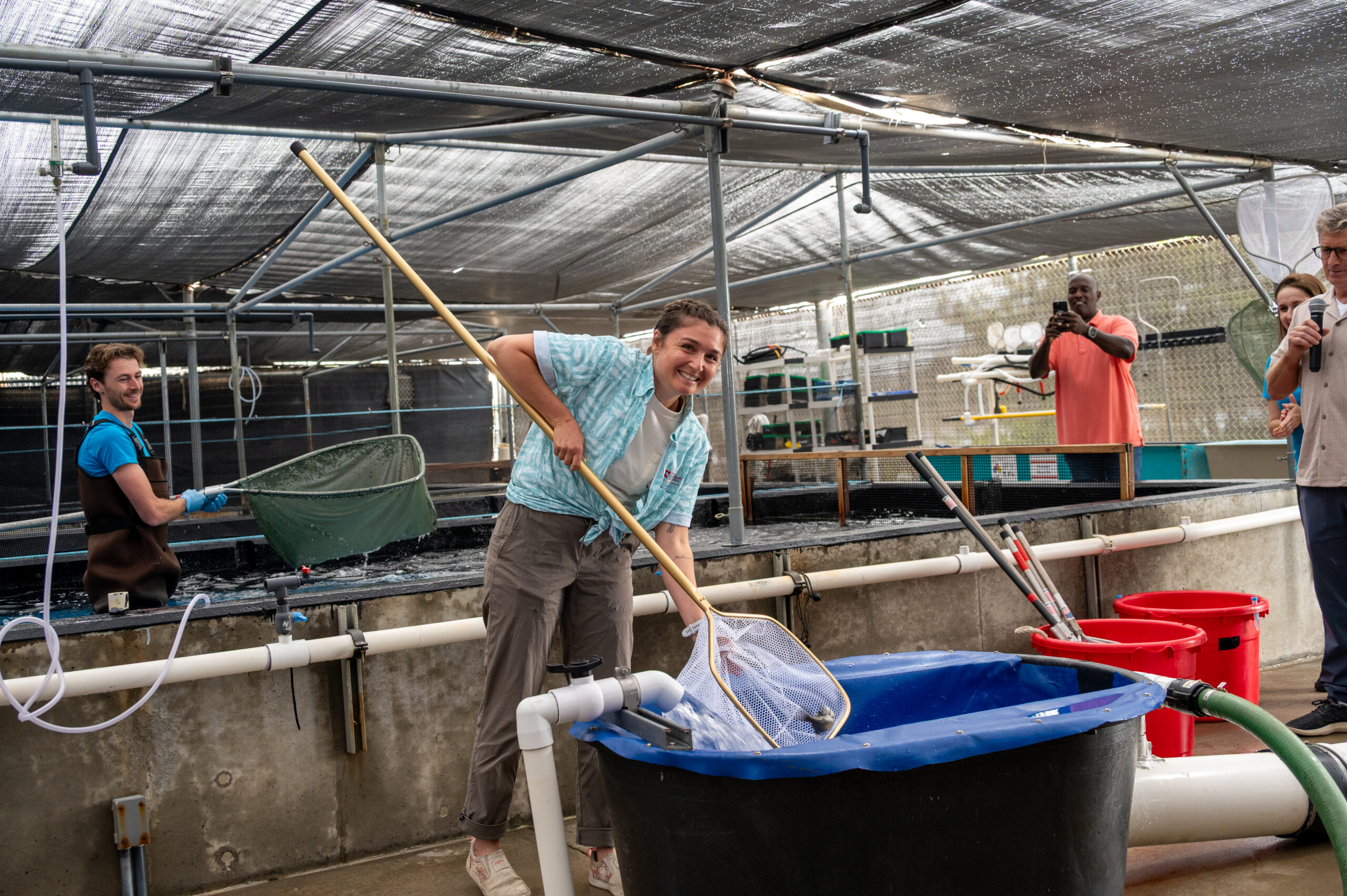
In April, the Hubbs-SeaWorld Research Institute (HSWRI) reached a major milestone by releasing the three-millionth hatchery-reared white seabass into the wild at Agua Hedionda Lagoon in Carlsbad. Tonie Bangos, regional director for CCA California, released the milestone fish and was joined by Bill Shedd, chairman of AFTCO and CCA California Regional Director Erik Landesfeind.
CCA California partners with HSWRI by providing insurance for the hatchery program’s white seabass grow-out pens which are operated by CCA members and volunteers. Today, there are 13 grow-out pens along the Southern California coast, from Santa Barbara to San Diego, including two facilities on Santa Catalina Island. These facilities are designed, constructed, and operated by volunteers associated with angler groups and non-profit organizations, including CCA California.
The first experimental release of more than 2,000 juvenile white seabass took place in October of 1986 in Mission Bay. In October of 1995, the Leon Raymond Hubbard, Jr. Marine Fish Hatchery in Carlsbad became operational with the hatchery capable of producing more than 350,000 juvenile white seabass annually.
Each fish is tagged internally in the cheek with a small, stainless steel coded wire tag to identify it from wild individuals that can only be located by a specialized detection device. Some of the information obtained from tagged individuals includes movement, age, diet, growth, and, most importantly, survival rate from that particular spawning stock. Today, this information is being supplemented by advanced genetic studies and isotope research using the otoliths from landed fish.
CCA California is now working with the Dick Laub Fisheries Replenishment Program, HSWRI, California Department of Fish and Wildlife, as well as the marine science community and recreational anglers on the next species authorized for release. A survey of coastal recreational anglers is underway to determine what species are important to them.